Explainable AI Researcher & Engineer · Puebla, MX

Research Depth.
Industry Impact.

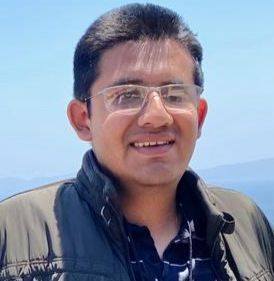
I am Emilio Hernandez Arellano. I bridge the gap between mathematical foundations and scalable engineering to build optimal and explainable AI solutions.

2 Q1 Journals
1 MSc Thesis
2+ Years Industry
100 Team Pipeline
Emilio Hernandez

Duality

One Engineer. Two Perspectives.

Academic Track

The Researcher

I focus on the "Why." I develop white-box analytical models to solve complex vision tasks. My work leverages evolutionary computation to extract hidden structural information from suboptimal environments, providing a transparent alternative to opaque Deep Learning.

Industry Track

The Builder

I focus on the "How." I build reliable, transparent algorithms and Python pipelines that handle real revenue and automation workflows that retain real people.

Languages

Python C/C++ Bash MATLAB

AI & Computer Vision

OpenCV Scikit-Learn NumPy Pandas Scikit-Image TensorFlow PyTorch

Advanced Methods

Explainable AI (XAI) Evolutionary Computation Generative AI Heuristic Optimization

Design & Tools

Linux Git Fusion 360

Human Languages

🇲🇽 Spanish · Native 🇺🇸 English · B2

Industry

Applied Solutions

2026

AI Trainer

Outlier · Remote

  • Evaluated multimodal content to determine whether images and audio were generated by AI systems.
  • Assessed artistic sketches to determine feasibility for realistic reconstruction using generative AI models.
  • Provided structured feedback contributing to improvements in frontier multimodal AI systems.

2025 — Present

Data Engineering & AI Automation Consultant

Swiss Just · Remote

  • Designed a data pipeline transforming Excel sales reports into a structured SQLite relational database, reconstructing the hierarchical consultant network through upline relationships.
  • Parsed product catalogs from PDF and structured them into a product database to track promotions, pricing, and product availability.
  • Developed a greedy optimization algorithm to compute minimum-cost product combinations ensuring consultants reach required sales targets.
  • Automated the generation of ~120 personalized performance messages per reporting cycle based on consultant metrics.
  • Generated segmented performance reports for team leaders by querying consultant subtrees within the relational hierarchy.
  • Built a WordPress automation pipeline extracting product assets from catalogs and generating structured promotional posts via a Gemini-assisted workflow.

Research

Q1 Contributions

Q1 Journal · 2025

Analytical-heuristic modeling and optimization for low-light image enhancement

Applied Soft Computing (Elsevier)

Axel Martinez, Emilio Hernandez, Matthieu Olague, Gustavo Olague

  • Designed Dichotomy Tuna, a 7-parameter analytical algorithm extending the tone-dichotomy model for low-light image enhancement.
  • Integrated both the original mathematical model and the proposed algorithm into a Genetic Algorithm optimization framework.
Validation Software Methodology Investigation Data Curation
Read Paper →
Q1 Journal · 2025

Modeling Image Tone Dichotomy with the Power Function

Applied Mathematical Modelling (Elsevier)

Axel Martinez, Gustavo Olague, Emilio Hernandez

  • Applied the tone-dichotomy mathematical model to recover hidden structural information from complex visual imagery.
  • Demonstrated applications including cultural heritage analysis and structural detail recovery.
Visualization Validation Software Investigation Data Curation
Read Paper →
Dataset · 2025

Adversarial attacks dataset for low light image enhancement

Data in Brief (Elsevier)

Axel Martinez, Matthieu Olague, Gustavo Olague, Emilio Hernandez, Julio Cesar Lopez-Arredondo

Software Methodology Investigation
Dataset →
Service · 2024 — 2025

Peer Reviewer

Engineering Applications of AI · Elsevier

Ensuring methodological clarity and scientific rigor for manuscripts in the field of Artificial Intelligence.

ORCID Profile

Academia

Research Foundations

MSc · 2022 — 2024

Computer Science

CICESE · Baja California, México

Thesis: Use of Dichotomies for the Enhancement of Low-Light Colored Images

  • Developed an intrinsically explainable analytical model capable of recovering hidden information from low-light images.
  • Leveraged parameterized modeling and optimization techniques to maintain visual fidelity and interpretability.

Advised by Dr. Gustavo Olague — recognized among the World's Top 2% Scientists (Stanford · Elsevier, 2023).

BSc · 2017 — 2022

Biomedical Engineering

UDLAP · Puebla, México

Built foundations in signal processing, human physiology, and medical instrumentation — the bridge between biology and computation that shapes my research lens today.

Projects

Explorations